
Bali’s beauty is inseparable from its iconic coastlines from Pandawa Beach, Seminyak Beach, Legian Beach, and many others. These beaches are not only natural tourism destinations but also serve as essential centers of spiritual and cultural life for local communities. This is what makes Bali’s coastal areas profoundly important.
However, Bali’s coastlines are currently under threat due to erosion and rising sea levels. A study conducted by researchers from Indonesia, Japan, and Türkiye published on May 29 in the journal Regional Studies in Marine Science found that Bali’s coastline decreased from 668.64 kilometers to 662.59 kilometers between 2016 and 2021, with an average retreat of -1.21 meters per year.
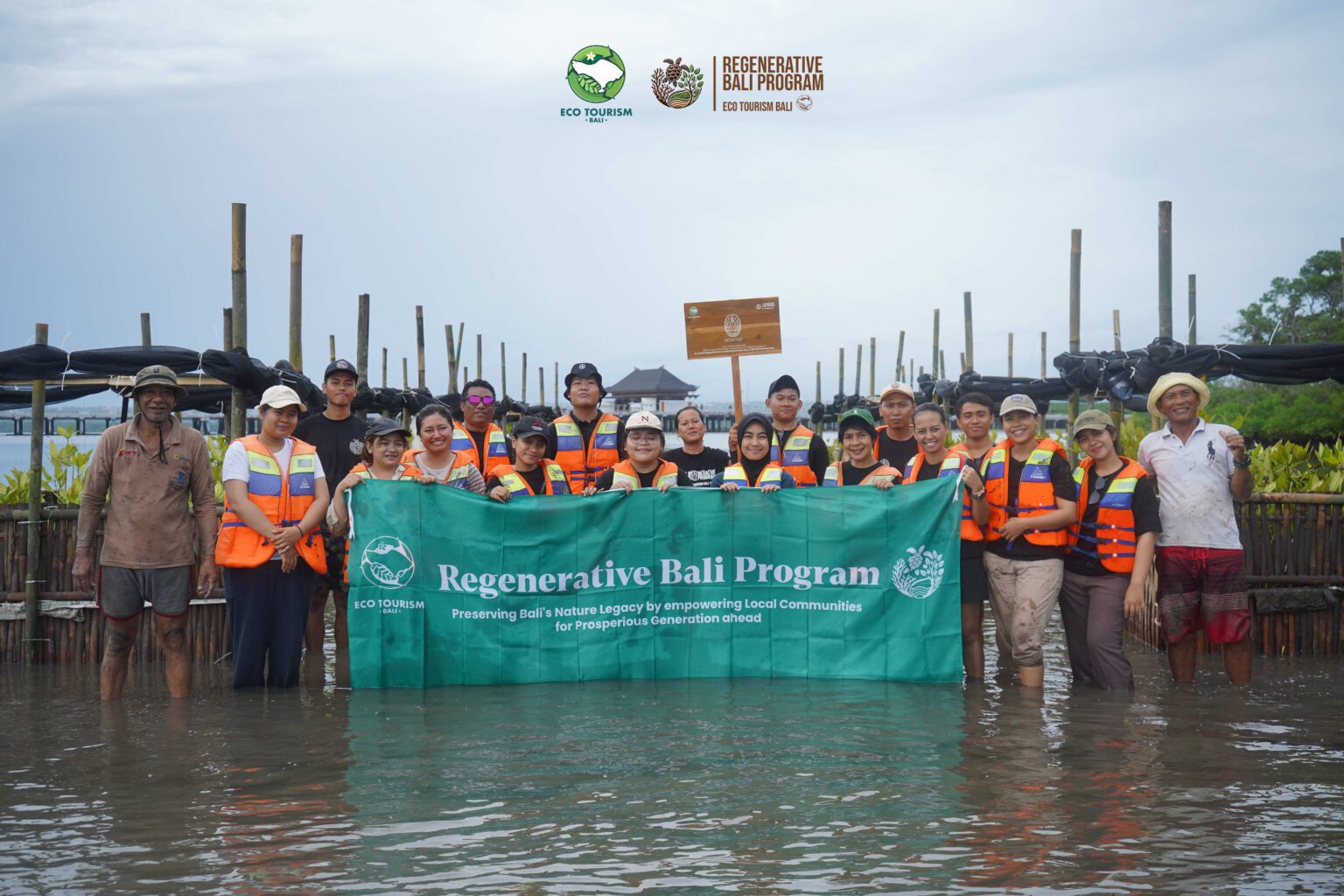
In response, through the Regenerative Bali Program (RBP), and in commemoration of World Tsunami Awareness Day (5 November) and World Fisheries Day (21 November), Eco Tourism Bali supported by Desa Hay and Potato Head successfully planted 3,000 mangrove seedlings on November 12–13, 2025, together with student volunteers at the Batu Lumbang Mangrove Ecotourism Area. This initiative aims to help protect and restore Bali’s coastlines.
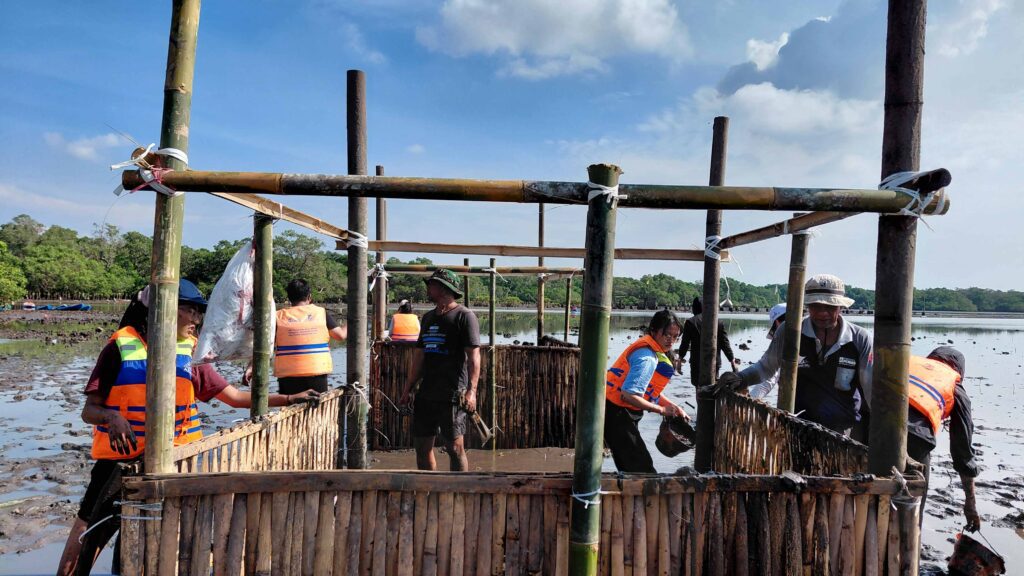
Day One: Starting from the Roots Preparing Planting and Distributing Seedlings
The activity began with filling soil into 10 planting boxes, an essential step before the mangrove seedlings could be further developed. Before heading to the site by canoe, participants received a safety briefing from I Wayan Pasek Pastika, Head of Ekowisata Mangrove Batu Lumbang.
Upon arrival, participants and the Eco Tourism Bali team worked hand in hand using buckets, shovels, and hoes, applying a relay method to accelerate the soil-filling process.
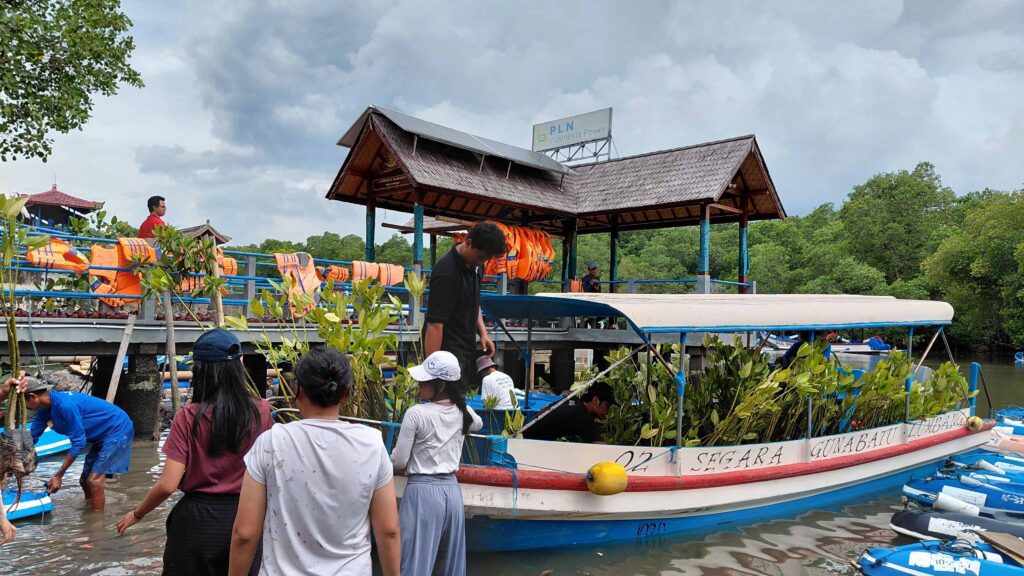
The activity continued with the distribution of 3,000 mangrove seedlings from wantilan area to the designated planting points. The seedlings were transported by boat, each trip carrying 750 seedlings.
Once again, the relay method became key to efficiency. Participants, the Eco Tourism Bali team, and Batu Lumbang staff coordinated seamlessly to ensure that all seedlings were transferred safely without damage. This effective distribution laid the foundation for successful planting on the second day.
Day Two: Planting Hope for a More Resilient Coastline
The second day marked the core of the activity, the planting of thousands of mangrove seedlings. Representatives from Hay Village attended, beginning with opening remarks from General Manager, Ms. Desi Kurniasih.
Before heading to the planting site, participants were given another canoe safety instruction by Nyoman Sukada from Batu Lumbang team. Upon arrival, the planting coordinator conducted a technical briefing, covering topics such as planting depth, seedling spacing, and how to ensure proper root placement.
Despite continuous rain, activities proceeded smoothly. Student volunteers, Desa Hay team, Eco Tourism Bali, and Batu Lumbang staff worked collectively to plant the seedlings while also cleaning and organizing the surrounding area.
Just like Bali’s food sector, which relies heavily on natural resilience, restoring coastal ecosystems through mangrove rehabilitation is essential to ensuring long-term ecological stability and community well-being.
Collaboration to Protect Bali’s Coastlines
The mangrove planting activity under Desa Hay Regenerative Bali Program was successfully executed from preparing planting to seedling distribution, to field planting. Strong coordination among all partners ensured smooth and effective implementation.
As a form of appreciation for the financial support provided, Eco Tourism Bali presented a token of appreciation to Ms. Desi Kurniasih. This support enables long-term regenerative efforts that create meaningful impact.
It is hoped that the thousands of mangrove seedlings planted this year will grow effectively, strengthening the coastline of Batu Lumbang Mangrove Ecotourism Area and providing ecological benefits for surrounding communities from disaster protection, improved fisheries, to enhanced ecotourism activities.
Your Company Can Also Contribute
Your company or your organization can also take part in the Regenerative Bali Program in collaboration with Eco Tourism Bali. For more information regarding other regenerative initiatives, please contact: in**@************li.com
Writer: Anisa Aulia