
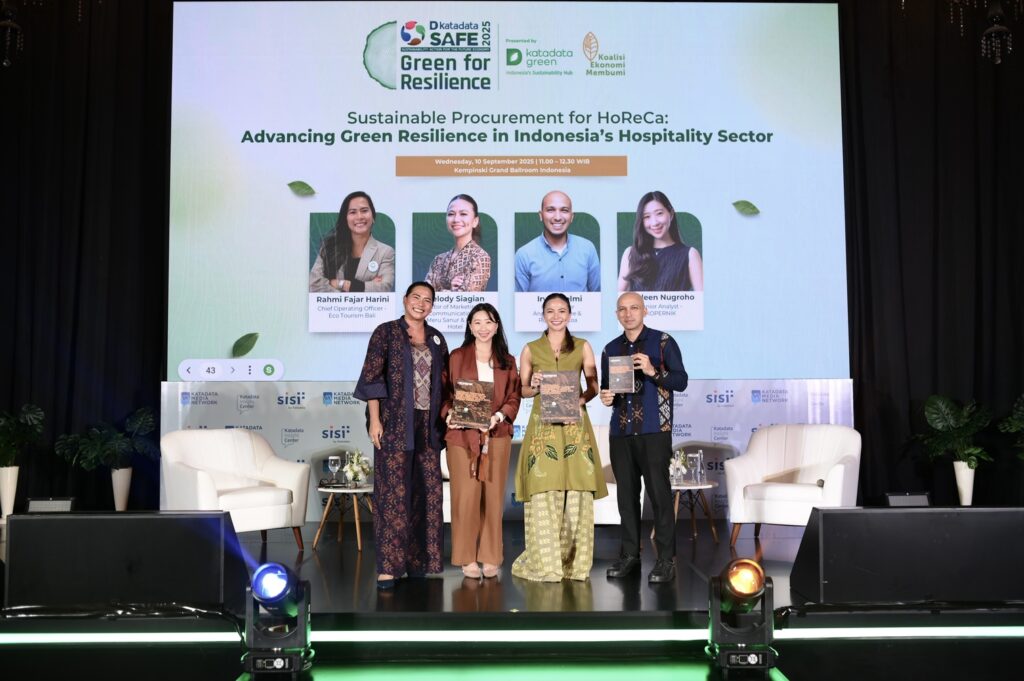
On September 10, 2025, Eco Tourism Bali proudly participated in Katadata SAFE 2025 – Green for Resilience, held at Hotel Indonesia Kempinski, Jakarta.
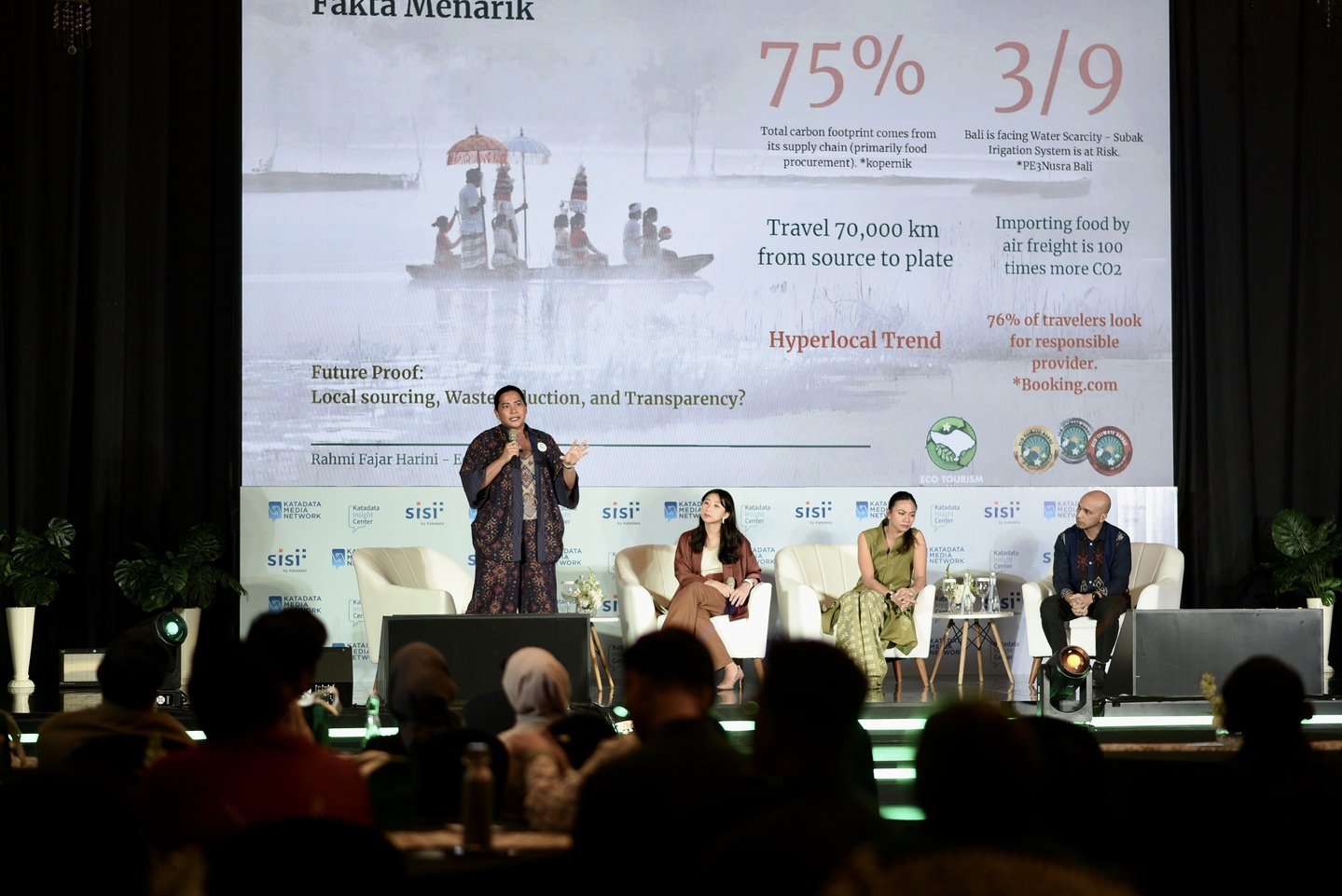
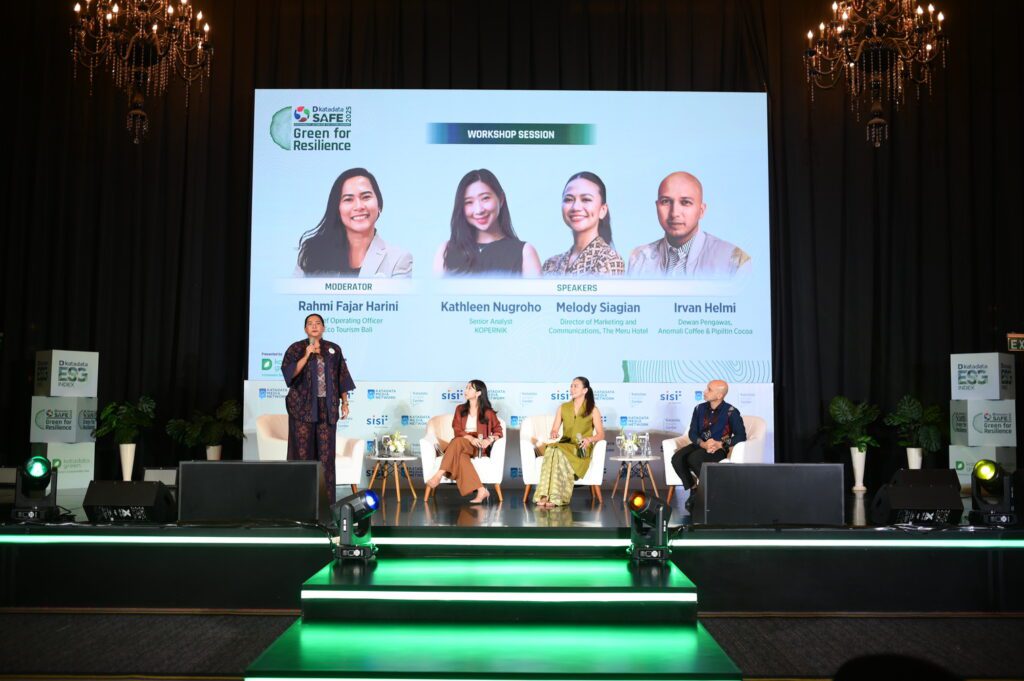
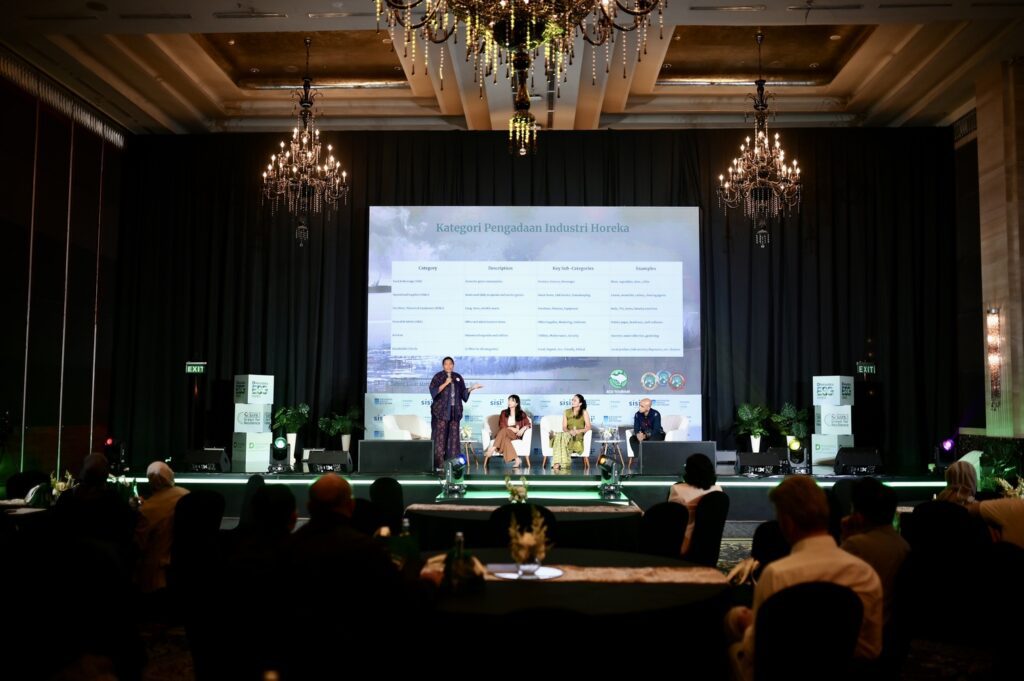
In the breakout session “Sustainable Procurement for HoReCa: Advancing Green Resilience in Indonesia’s Hospitality Sector,” our COO, Rahmi Fajar Harini, moderated an insightful discussion with industry leaders on how the hospitality sector can embrace sustainable procurement as a pathway to eco-friendly and community-centered tourism in Indonesia.
Rethinking Supply Chains in Hospitality
The hospitality industry often relies on global supply chains that create significant environmental costs:
- Food served in hotels and restaurants can travel up to 70,000 km from source to plate.
- Air-freighted imports emit 100 times more CO₂ compared to locally sourced products.
Highlighting these challenges, Rahmi emphasized:
“Bagaimana tren pariwisata menciptakan permintaan rantai pasok lokal dan rantai nilai yang berkelanjutan.”
(How tourism trends create demand for local supply chains and sustainable value chains.)
This statement reflects the growing importance of responsible tourism that prioritizes local producers, reduces emissions, and builds resilient communities.
Key Insights from the Panel
The session brought together experts:
- Kathleen Nugroho (Kopernik)
- Melody Siagian (The Meru Hotel)
- Irvan Helmi (Anomali Coffee & Pipiltin Cocoa)
Together, they discussed practical ways for HoReCa businesses (Hotels, Restaurants, and Catering) to make their procurement greener and more impactful: Hyperlocal sourcing – reducing carbon footprint by purchasing from local farmers and small producers.Waste reduction – shifting to eco-friendly packaging, composting, and circular economy solutions.Transparent procurement – ensuring accountability through traceable supply chains, certifications, and fair supplier practices.

The Sustainable Procurement Guideline: A Roadmap for Green HoReCa Solutions
This dialogue was informed by the Sustainable Procurement Guideline (SPG), developed by Kopernik, Koalisi Ekonomi Membumi (KEM), and Eco Tourism Bali (ETB). The guideline helps small and medium HoReCa businesses in Indonesia adopt eco-friendly procurement practices step by step:
- Product Identification: Selecting sustainable materials, certified goods, and locally sourced ingredients.
- Supplier Assessment: Evaluating suppliers’ sustainability commitments, social impact, and credibility.
- Logistics & Waste Management: Using shorter delivery chains, reusable packaging, composting, and efficient waste practices.
To make it practical, a Supplier Assessment Scoring Tool was created to help businesses measure suppliers’ sustainability performance and integrate eco-friendly standards into procurement decisions
Addressing the Challenges
Despite growing awareness, many HoReCa businesses face barriers in adopting green procurement practices:
- Limited knowledge about sustainable suppliers.
- Dependence on large distributors outside local regions.
- Budget challenges, with sustainable products costing up to 20% more.
The SPG provides practical and flexible solutions:
- Simple step-by-step guidelines for businesses starting their green journey.
- A curated list of reliable, sustainable suppliers.
- Budget-based options, where businesses can choose whether to begin with waste management, local sourcing, or eco-friendly packaging.
Building a Green and Resilient Tourism Future
The session underscored a clear message: sustainable procurement in hospitality is not just about reducing environmental footprints, but also about empowering local communities and strengthening resilience.
At Eco Tourism Bali, we are committed to advancing eco-friendly tourism in Indonesia by championing responsible supply chains and supporting businesses to adopt sustainable HoReCa solutions. Together, we can build a hospitality industry that is green, resilient, and future-proof.
Thank you to Katadata SAFE 2025 for bringing this important conversation to the forefront of Indonesia’s sustainable tourism journey